
Logging the Jordan River: Rail, Roads and a Changing Watershed
The diitiida / Jordan River watershed lies within the unceded, traditional territory of the Pacheedaht First Nation.
By the early 1900s, the provincial government had designated the land as Crown land, enabling timber rights to be issued without the consent of the Nations whose territories were affected.
In 1909, a “million-dollar lumber deal” marked the beginning of large-scale logging in Jordan River. Tens of thousands of acres of timber were acquired, with plans to begin harvesting and shipping soon after.
At the time, this kind of investment reflected a broader shift along the coast. Logging was moving away from small, localized operations toward larger, capital-driven extraction, supported by infrastructure built specifically to move timber out of remote valleys like this one.
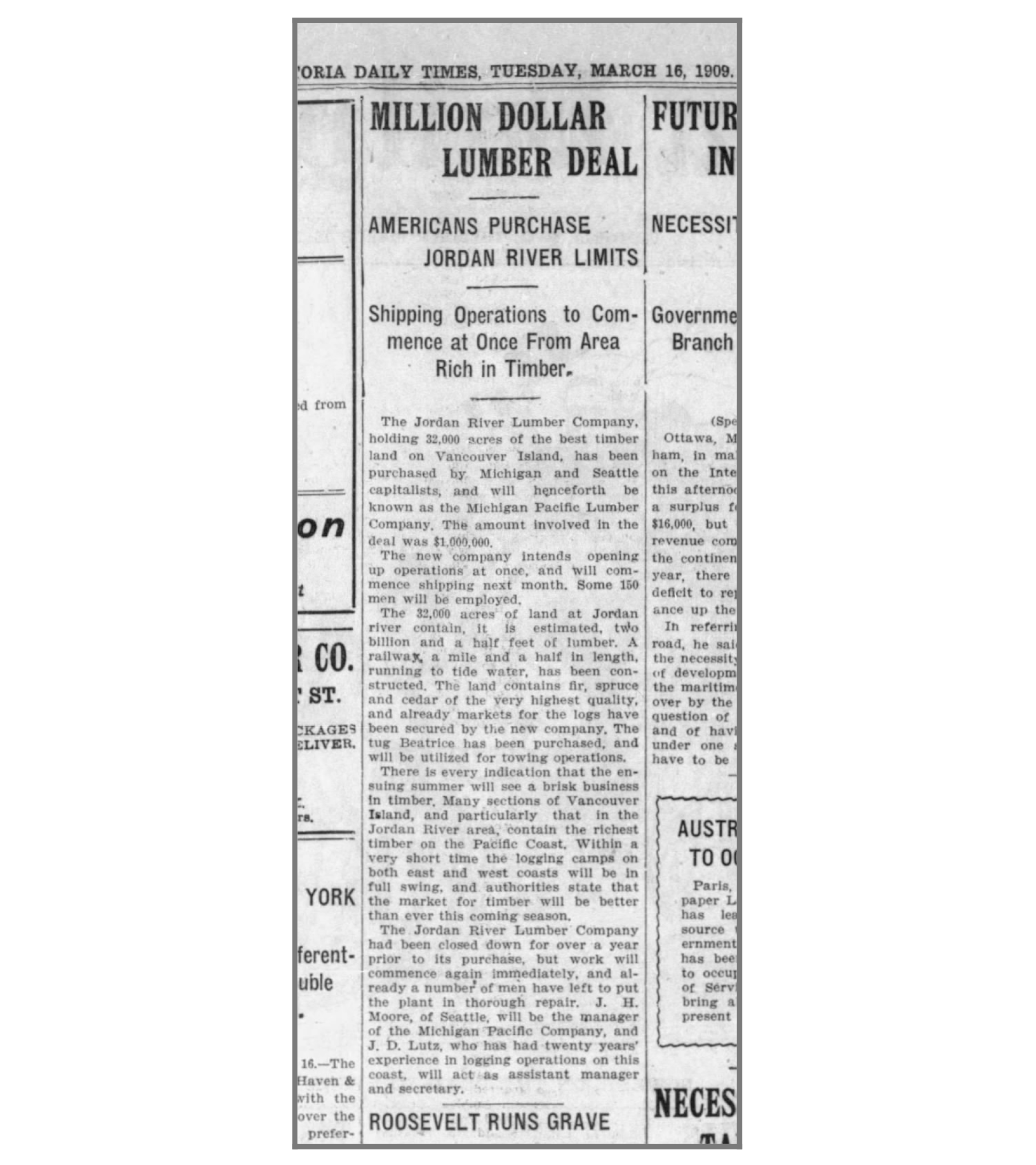
Published in the The Victoria Daily Times on March 16, 1909.
Rail into the Valley
To make that scale of logging possible, access had to be built. In the Jordan River, that began with a narrow-gauge railway that ran more than five miles inland from the coast.
The railway shaped the early footprint of logging in the watershed. Timber within reach of the line could be harvested and transported efficiently.
This kind of rail-based logging was common across coastal British Columbia in the early 20th century. Railways allowed companies to move large volumes of timber from steep, heavily forested terrain that would have otherwise been difficult to access.
As road-building technologies improved and heavy equipment became more widely used, rail lines were phased out. In the Jordan River, as elsewhere, roads replaced rail, allowing logging to extend further into the watershed and into terrain that had previously been inaccessible.
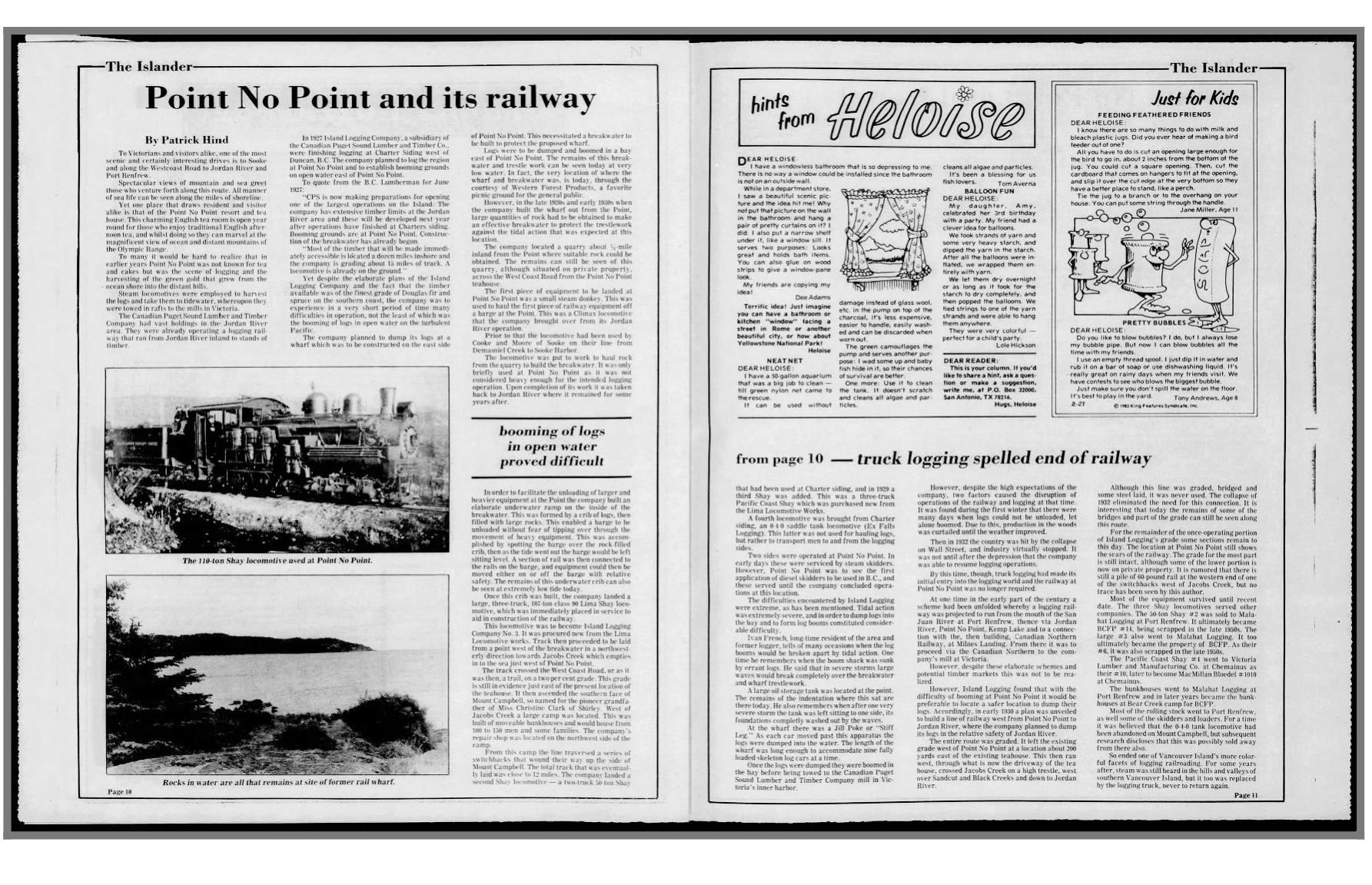
Published in the Times Colonist on February 20, 1983.
A Logging Boom
By the early to mid-20th century, logging in the Jordan River had intensified.
According to a 1969 Daily Colonist article, much of the “accessible big timber” in the area had already been felled during earlier operations, including those led by the Puget Sound Lumber Company.
This period reflects a broader trend across coastal British Columbia. As equipment improved and transportation networks expanded, logging operations were able to increase both their scale and efficiency. Areas that had once been too difficult or costly to reach became viable.
In the Jordan River, that meant the gradual expansion of logging deeper into the watershed, with each phase building on the access established by the last.
Changes on the Ground
Removing forest cover alters how water moves through a landscape. Forests slow rainfall, stabilize soils and regulate runoff. When they are removed, water moves more quickly across the land, carrying sediment into nearby streams and rivers.
In the Jordan River, these changes affected the lower river, where salmon historically spawned. Spawning habitat depends on stable gravel, and increased sediment or shifting flows can alter those conditions.
At the river mouth, impacts were also documented. A 1975 Vancouver Sun article described logging debris accumulating in the Jordan River estuary, raising concerns about the loss of estuarine habitat.
Estuaries are a transition zone for salmon as they move between freshwater and the ocean. Changes in these areas can affect survival during a critical stage of their life cycle.

Published in The Vancouver Sun on January 4, 1975.
Layered Activity
Logging was not the only industry active in the watershed, but it was one of the earliest at scale.
Later activity, including mining and hydroelectric development, took place within a landscape that had already been altered by logging. Roads, cleared areas and changes to drainage patterns formed the basis for further development.
Each phase added to the previous one, contributing to the overall condition of the watershed.