
From River to Sea: The Impact of Salmon Decline in the Jordan River
Rivers don’t exist in isolation.
They are part of a larger system that connects land to ocean, freshwater to marine ecosystems, and salmon to the species that depend on them.
The Jordan River is one of many coastal watersheds that once supported salmon runs, pink, chum, coho and steelhead returning from the ocean to spawn in its lower reaches.
Today, those runs have all but disappeared. And while the changes in this watershed are local, their effects are not. Across the Salish Sea, the loss of salmon is part of a broader pattern, one that extends beyond individual rivers, reaching species like the endangered Southern Resident killer whales.
A River Shaped by Cumulative Impacts
The decline of salmon in the Jordan River did not happen all at once. It reflects decades of layered change, much of it concentrated in the lower river, where salmon once spawned in significant numbers.
Historically, these lower reaches, near where the river meets the ocean, relied on a steady supply of gravel and sediment carried downstream by natural flows. That system has been significantly altered.
Hydroelectric development in the early 1900s, beginning with the Jordan River Dam, changed how water moves through the watershed, reducing peak flows and interrupting the natural transport of sediment. Without that sediment, the lower river has become increasingly sediment-starved. Spawning gravels are no longer replenished at the same rate, and higher flows can scour existing material away, leaving less stable habitat for salmon.
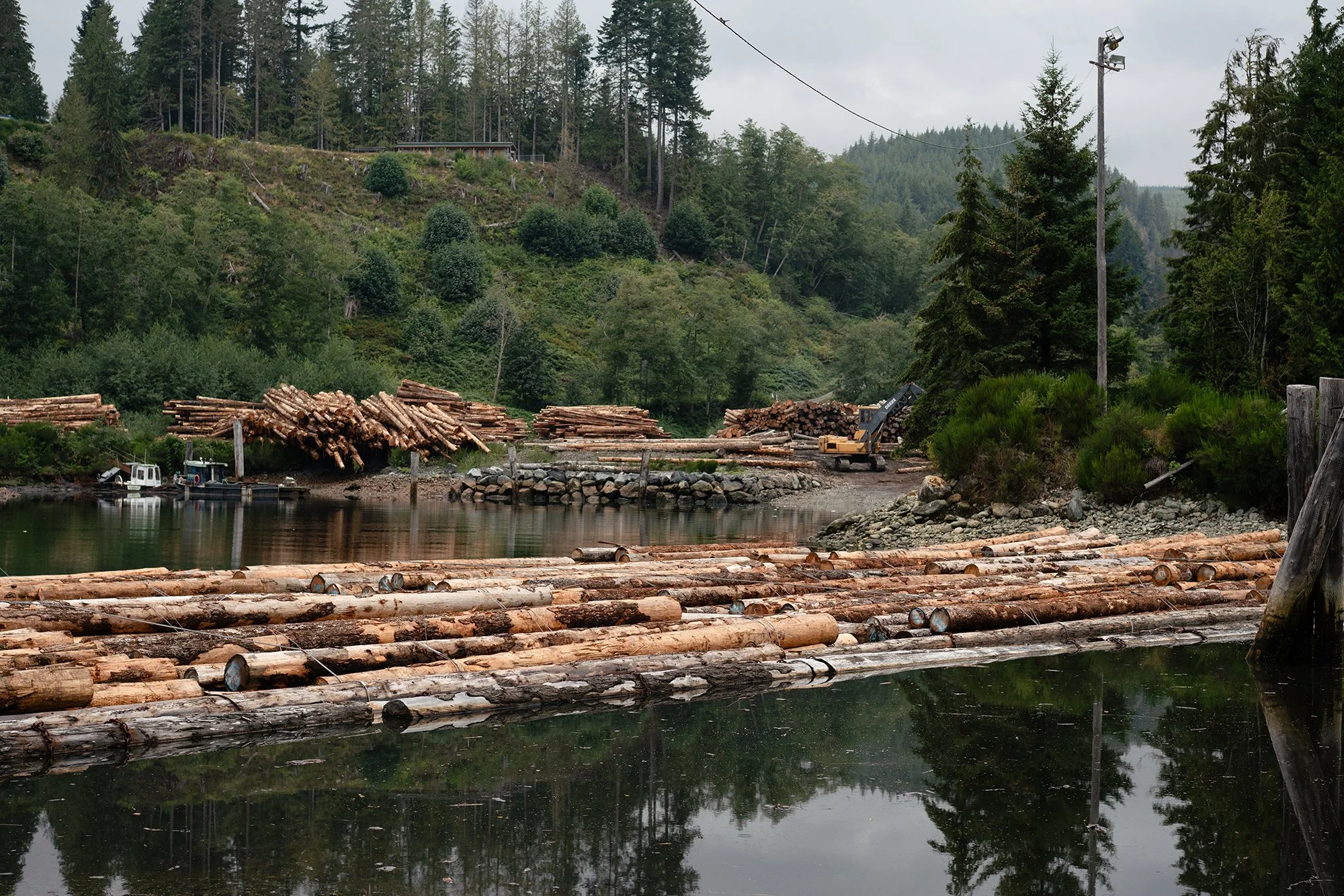
Log sort operations in the lower reaches of the Jordan River.
At the same time, industrial activity reshaped the river mouth and estuary. Logging and infrastructure altered the structure of this transition zone, while material from mining collapses contributed to estuary infilling. These changes affect how the river connects to the ocean, reducing habitat complexity in an area critical for salmon moving between freshwater and marine environments.
Mining also introduced contamination, including copper, which can impact salmon at low concentrations by affecting behaviour, development and survival at key life stages.
Each of these pressures, altered flow, reduced sediment, habitat loss and water quality impacts, affects salmon differently. Together, they compound.
Over time, these cumulative changes have reduced the river’s ability to support salmon.
Salmon Connect River to Sea
Salmon move between ecosystems. They hatch in freshwater, grow in the ocean, and return to spawn. In doing so, they connect rivers, forests and the marine environment.
That connection is especially evident in Southern Resident killer whales (SRKW).
Southern Residents are fish-eating specialists, and Chinook salmon make up the majority of their diet, particularly during key feeding periods. These fish are larger and higher in fat than other salmon species, making them an important source of energy.
Research has shown a strong relationship between Chinook availability and SRKW survival. When salmon abundance is low, mortality rates increase.
These whales do not rely on a single river. They forage across a wide area, from Puget Sound to the west coast of Vancouver Island, intercepting salmon as they migrate.
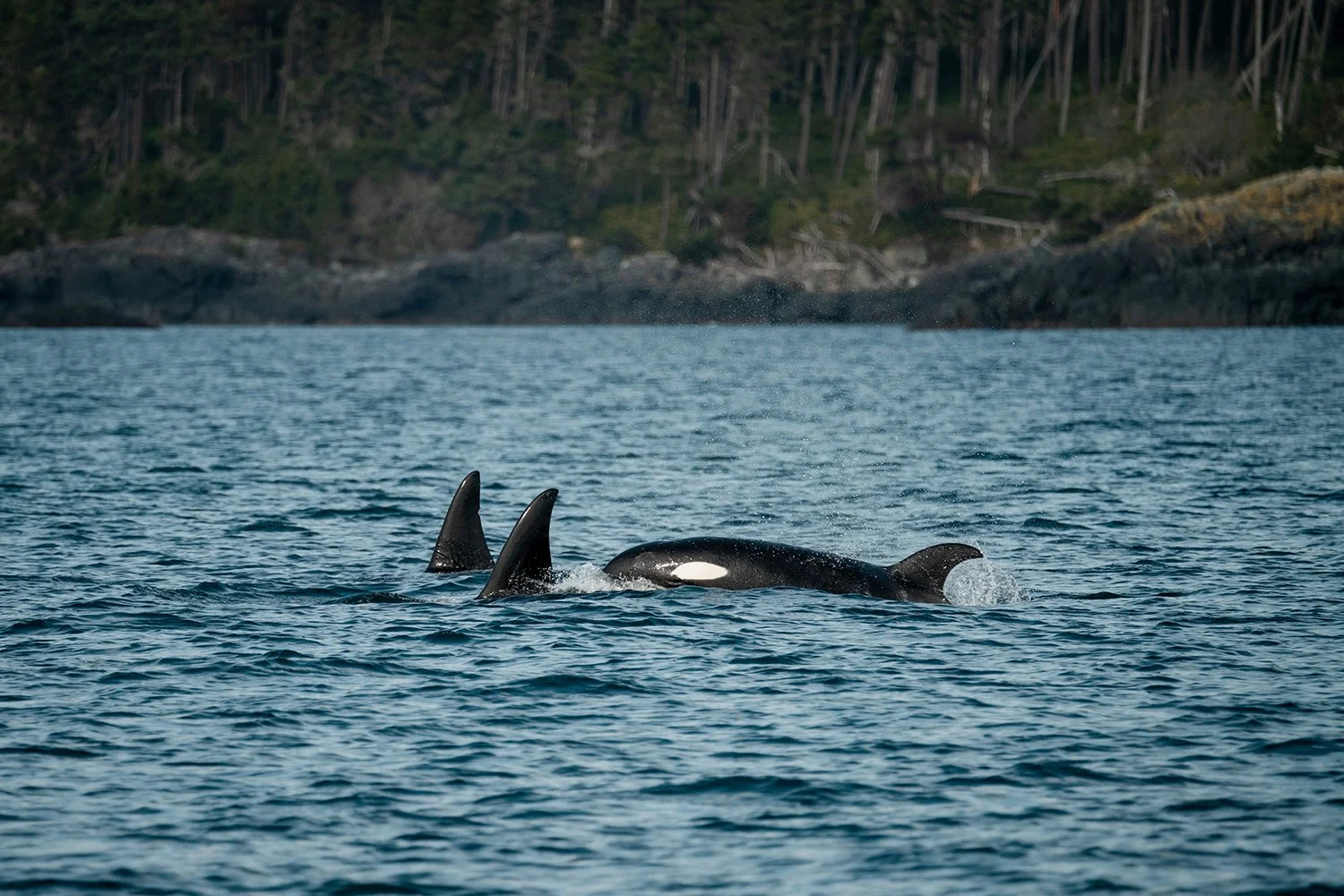
Bigg’s killer whales pictured; vessels must maintain a 1000 metre distance from Southern Resident killer whales. Photo: Nikkey Dawn
What Happens to Killer Whales When Salmon Decline?
The Jordan River is not a major Chinook-producing system on the scale of the Fraser River, but every watershed that no longer supports healthy salmon runs represents a loss across the broader system.
When multiple rivers are altered, through dams, land-use change or pollution, the cumulative effect is fewer salmon returning to the ocean. Over time, that reduces the overall abundance and diversity of salmon populations available to the species that rely on them.
For Southern Resident killer whales, reduced prey availability has been identified as one of the key factors limiting their recovery.
Why This Connection Matters
Increasing the abundance and accessibility of Chinook is a central focus of recovery efforts for the SRKW. That work needs to happen at many scales, from large river systems to smaller, local watersheds.