
the issues
Learn about the challenges facing the Jordan River watershed.
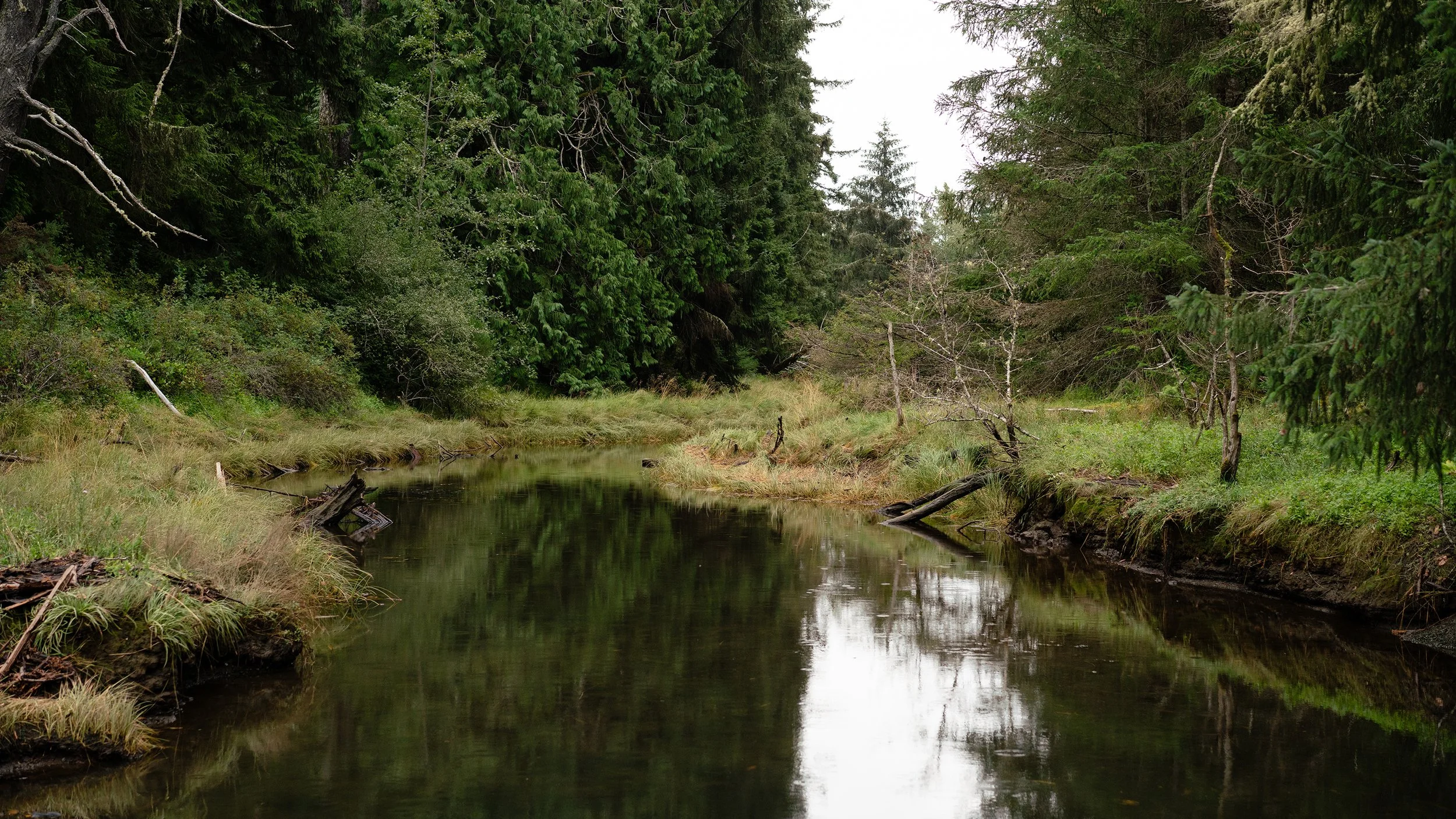
The challenges facing the diitiida/Jordan River Watershed are the result of layered, interconnected pressures that have accumulated over time.
Dams and hydropower development have altered natural water flows, disrupting the movement and deposition of gravels essential for salmon spawning and rearing. Without this ongoing replenishment, gravels are gradually eroded from the system, leaving channel beds increasingly scoured down to boulders.
Mining has left a legacy of contamination affecting water quality and habitat. While multiple metals are present, copper is a primary concern. Even at low concentrations, copper can impair salmon during key life stages, weakening their ability to survive in the river and beyond.
In the lower river and former estuary, wood waste remains an ongoing issue. Engineered ponds were constructed to contain leachate entering the system, but it is unclear how these systems are currently monitored, and nearby activities may be affecting their function.
Decades of industrial logging have also reshaped forests, soils and runoff across the watershed. These activities emerged through colonial systems of land use and resource extraction that prioritized economic gain over long-term ecological health.
Understanding how these forces interact is essential to understanding the current condition of the watershed and the constraints it faces today.
Learn about the Forces That Have Shaped Jordan River’s Decline
A 5-minute infographic film that explores some of the major events and constraints that have diminished the life-giving capacity of what was once one of the most abundant salmon-producing ecosystems on South Vancouver Island.
Timeline of Industrialization:
Learn About the history & Impact by Sector.
DAMS & HYDROPOWER
Learn how altered river flows affect salmon, habitat and the movement of water and sediment through the watershed.
MINING & WATER QUALITY
Discover how historic mining and mine waste continue to influence water quality today.

LOGGING & FORESTRY
Find out how forest practices shape erosion, runoff and the movement of water through the watershed.
What Would It Take for Salmon to Return to the Jordan River?
This video by the Comox Valley Art Gallery’s Youth Media Project explores the answer.
Visit the archive.
The archive was created to house the tremendous amount of historical records detailing the industrialization of the Jordan River watershed.
Browse by time period or topic.