
Dams and Hydropower
Altered flows in the Jordan River Watershed.
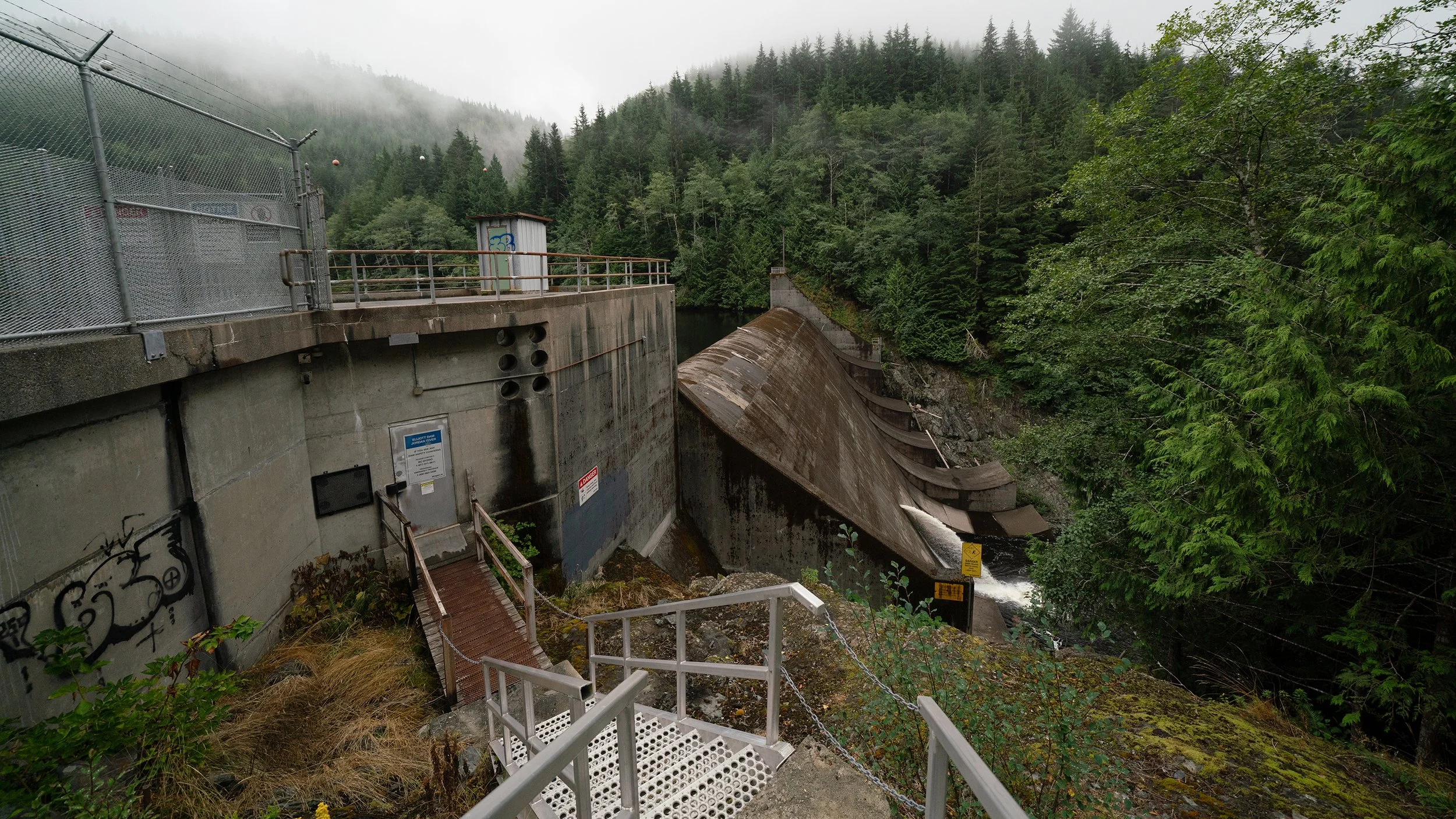
Hydropower development has fundamentally changed how water moves through the Jordan River Watershed. Dams and flow controls built to generate electricity have altered the river’s natural seasonal rhythms, disrupting the conditions salmon depend on throughout their life cycle. These changes continue to shape habitat, water quality and the river’s ability to support recovery.
-
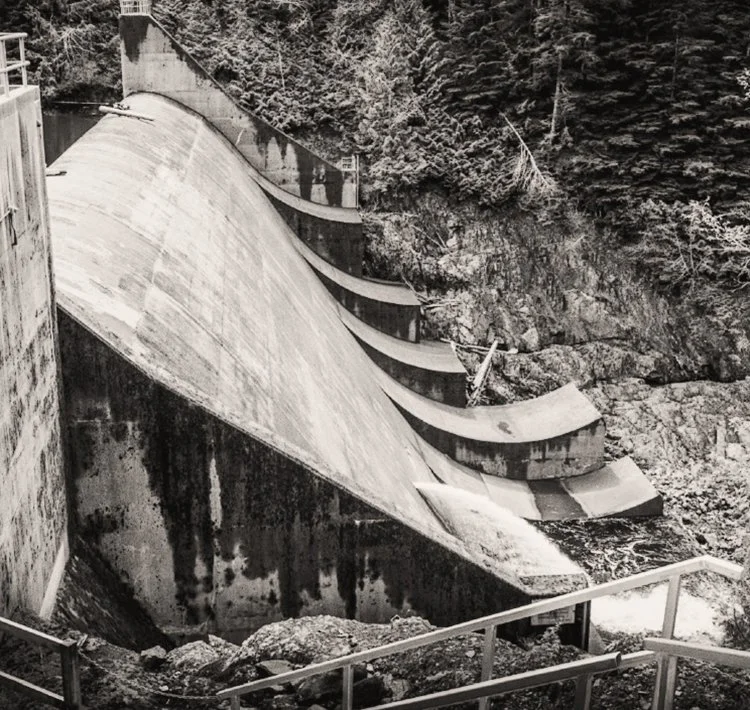
Hydropower development on the Jordan River includes the Diversion Dam (1911) and the Elliott Dam (1971), both of which regulate the timing and volume of water flowing downstream. By replacing natural seasonal patterns with managed releases, these dams have altered river connectivity, sediment movement and habitat availability. For salmon, these changes reduce access to upstream habitat and disrupt the flow conditions needed for migration, spawning and rearing.
-
Salmon rely on predictable flows, cool water and connected habitat to survive and reproduce. Changes in flow timing and volume can strand eggs and juveniles, degrade spawning gravel, increase water temperatures and reduce food availability. Over time, these impacts weaken salmon populations and affect the broader food webs and cultural and ecological relationships they support.
There has been a total habitat loss of 57 ha riparian habitat, 7 km of mainstem, 4 km of tributary and 15 ha of channel habitat. (Source: BC Hydro Jordan River Action Plan)
-
Improving conditions for salmon in a regulated river requires flow management that better reflects ecological needs. Potential approaches include adjusting release schedules, monitoring ecological responses and supporting collaborative planning that considers salmon, watershed health and energy production together. Long-term improvement depends on shared commitment to balancing human use with the needs of the river and the life it supports.
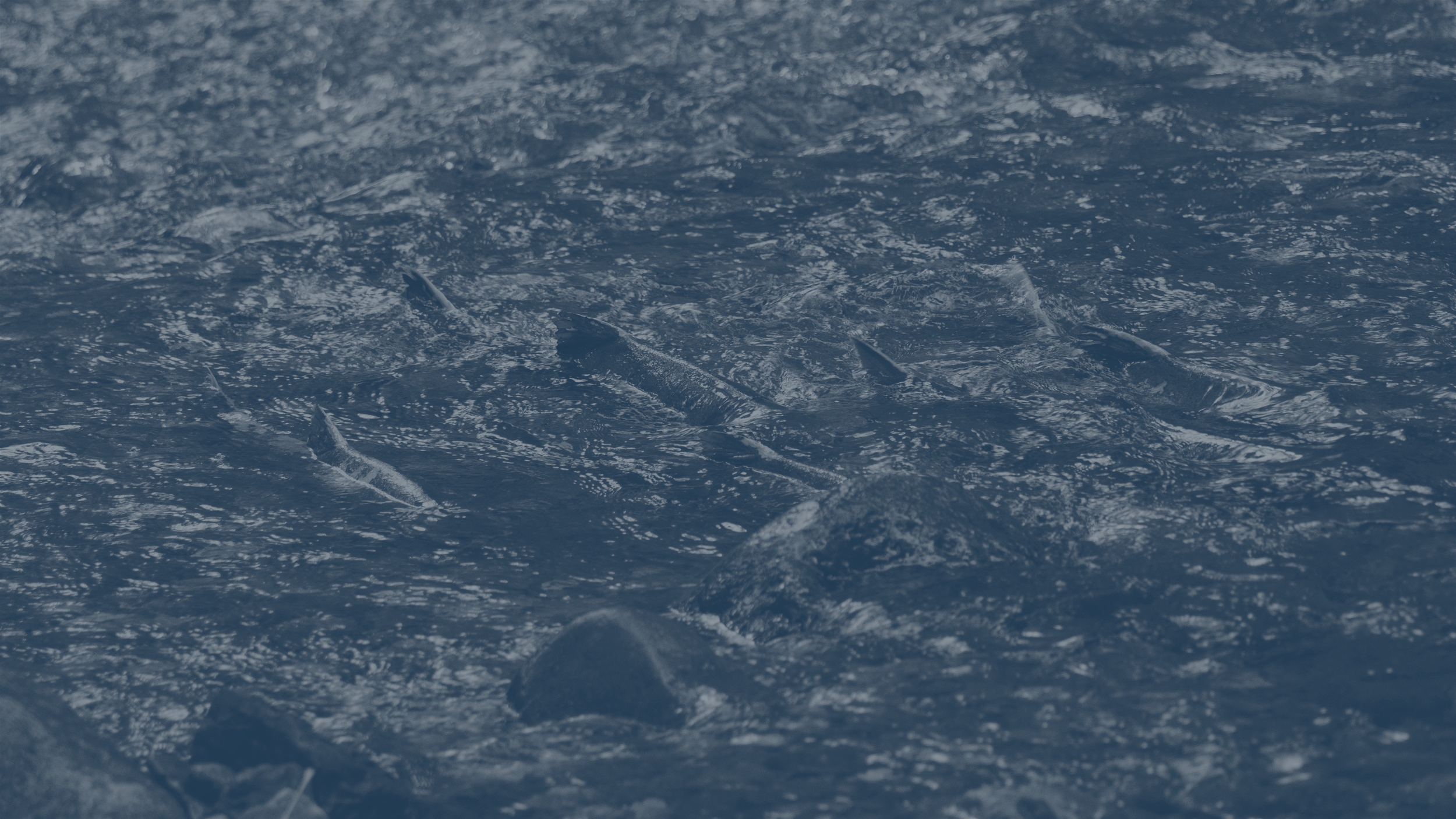
Colonial records describe salmon runs in the Jordan River numbering in the thousands before mid-20th century industrial development. Earlier Pacheedaht oral history, shared by Elder Bill Jones, speaks of salmon so abundant that people could walk across the river on the backs of fish.
By the 1970s, salmon were almost gone from the river, and they have remained at very low levels since. As a result, water flow decisions made through BC Hydro’s dams and powerhouse are now based on current conditions, rather than on the river’s historical capacity to support abundant salmon runs.
Acting together is essential for the future of salmon in the Jordan River.
Understanding Key Events:
-
Disruptions to the Jordan River’s natural flow began with the construction of the Diversion Dam in 1908, completed in 1911, to support hydroelectric power generation. Early changes to flow coincided with an initial decline in observed salmon abundance.
-
A hydroelectric powerhouse, now operated by BC Hydro, was constructed downstream, diverting water through the system and returning it to the river via a tailrace. As salmon declined in the main river channel, this tailrace became one of the only locations where small numbers of salmon were observed for several decades.
-
Between 1950 and 1970, recorded fish counts in the lower mainstem of the Jordan River declined rapidly to near extinction. As salmon disappeared from most of the river, observations became largely limited to the powerhouse tailrace. This decline established a shifting baseline, where BC Hydro’s flow management and planning decisions came to be based on a river with few or no salmon, rather than on the river’s historical ability to support abundant runs.
-
The Elliott Dam, constructed in 1971 and operated by BC Hydro, further altered river flows to support hydroelectric generation. Following its construction, fish counts in the river dropped to near zero and have remained extremely low since.
-
Since the completion of the Elliott Dam, river flows have been regulated through BC Hydro’s hydropower system, replacing natural seasonal patterns with managed releases. This ongoing regulation continues to influence habitat connectivity, sediment movement and conditions for salmon recovery.
-
After decades of decline, salmon are now rare or nearly absent from the Jordan River. Because these low numbers have persisted for so long, flow management and planning decisions, including those made by BC Hydro, are often based on today’s conditions rather than the river’s original ability to support large salmon runs. This makes it harder to plan for recovery and long-term change.
-
![]()
Elliott Dam
Year?
-
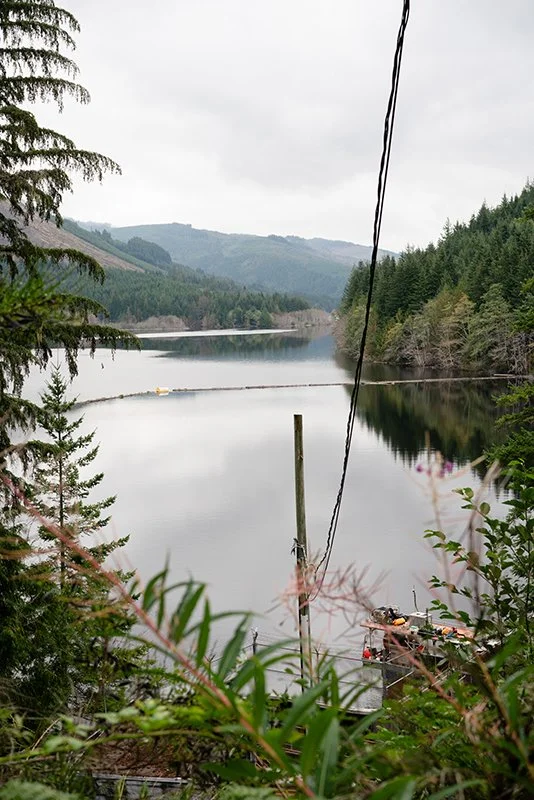
![A full reservoir behind the Elliot Dam lined by trees and a logging cut blocks in the distance.]()
Elliott Dam Reservoir
A full reservoir behind the Elliott Dam with logging cut blocks in the distance.
-
![A group of people next to a chainlink fence with a water reservoir in the background.]()
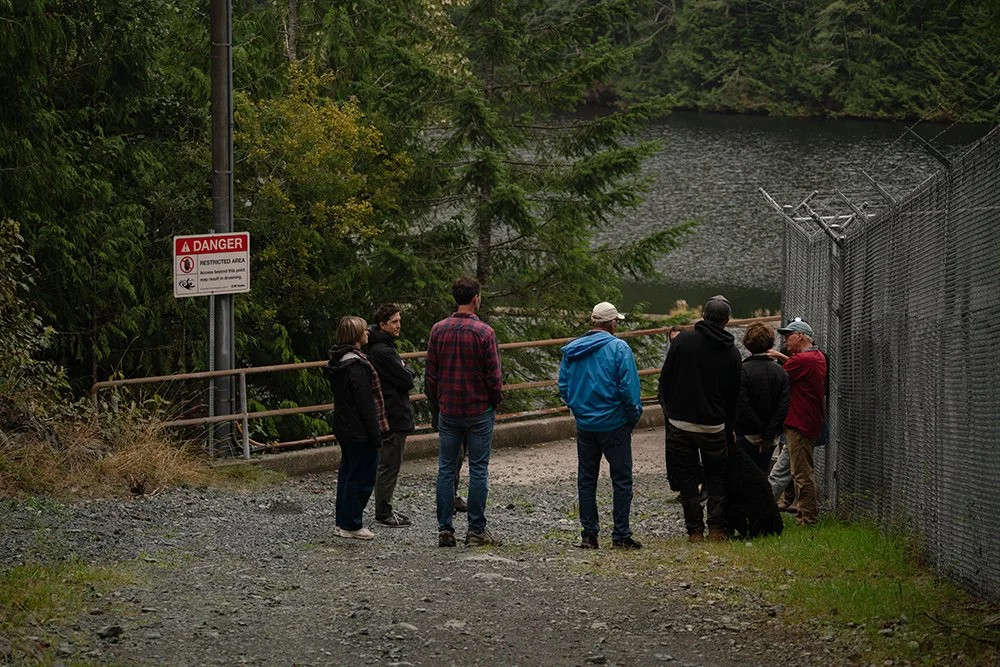
Watershed Tour
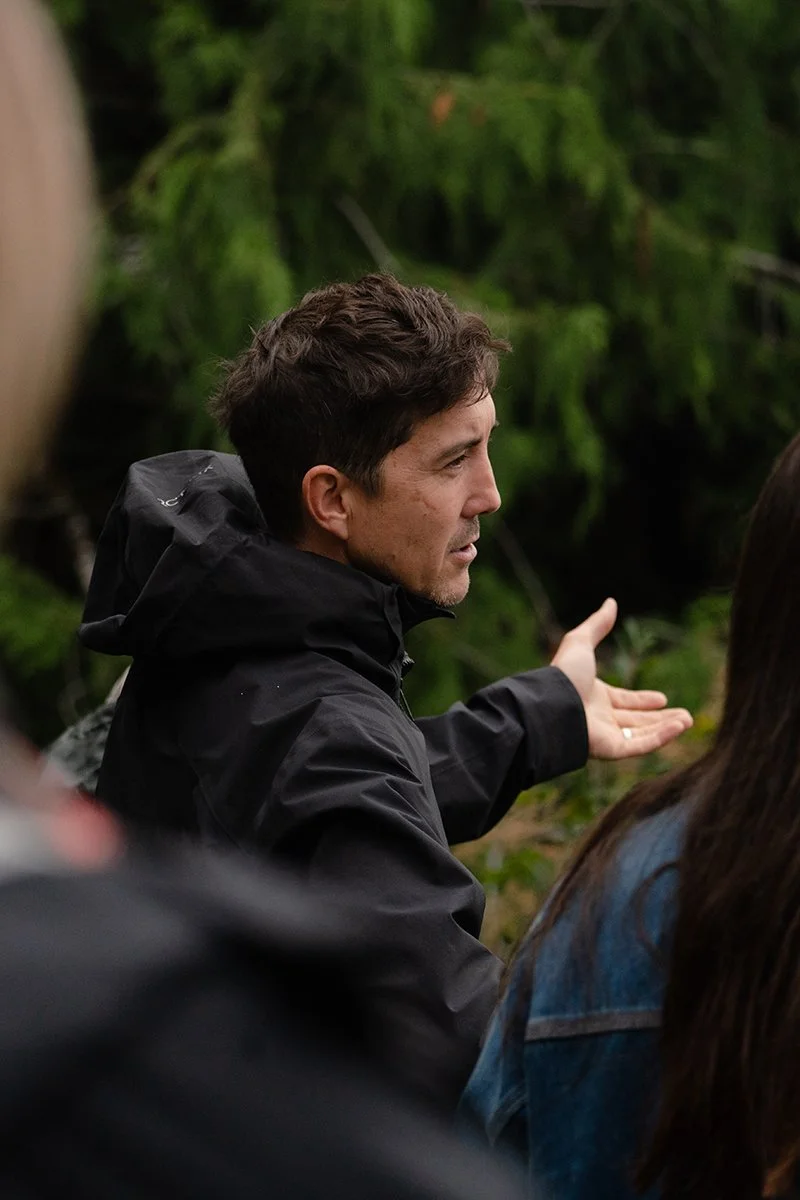
At a stop on the watershed tour, a group of community members listens to Wayne talk about the history of the Elliott Dam.
-
![A single stream of water coming out from the concrete dam into the river below]()
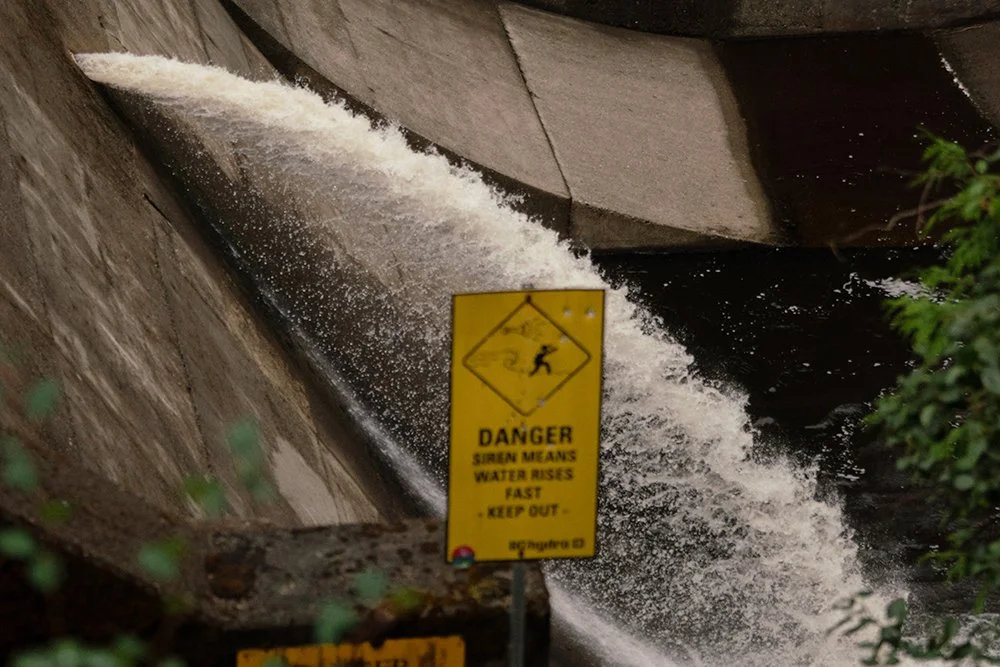
Elliott Dam Fish Flow
A new water use plan for the Jordan River Project saw a small increase in water released from the dam in 2008, today that fish flow remains just 0.25 m³/s.
-
![The mainstream spawning channel below the Elliott Dam Powerhouse, narrow river beside industrial activity.]()
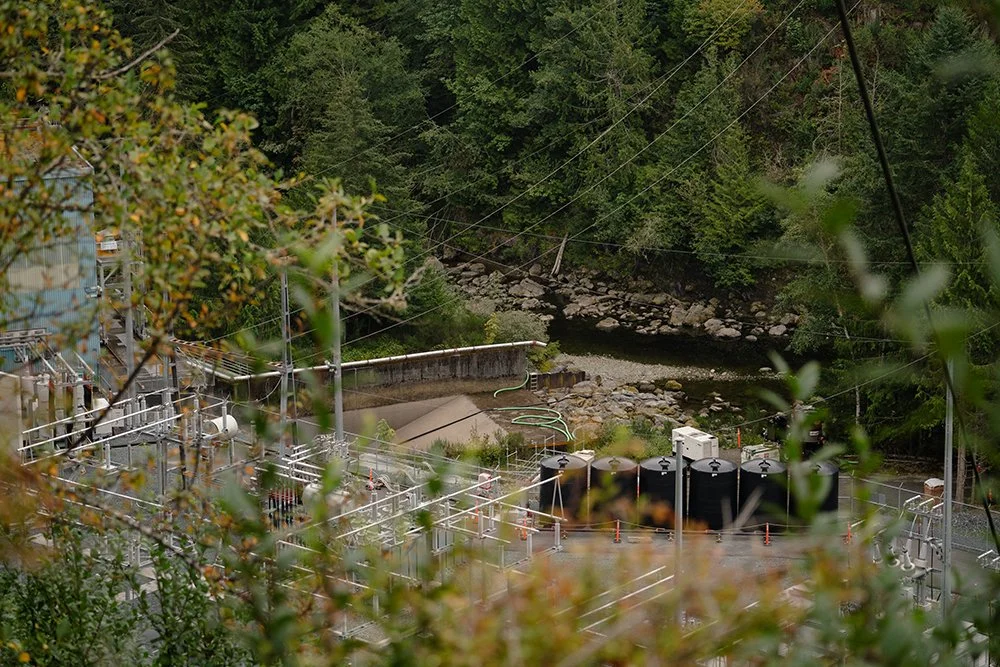
Salmon Spawning Channel at the Elliott Powerhouse
The dam blocks the movement of logs and gravel downstream, materials salmon need to create healthy spawning and rearing habitat. Without them, the river loses the structure salmon rely on to shelter, spawn and survive.
-
![an aerial image of the diversion dam showing the reservoir against the concrete structure of the dam and river below]()
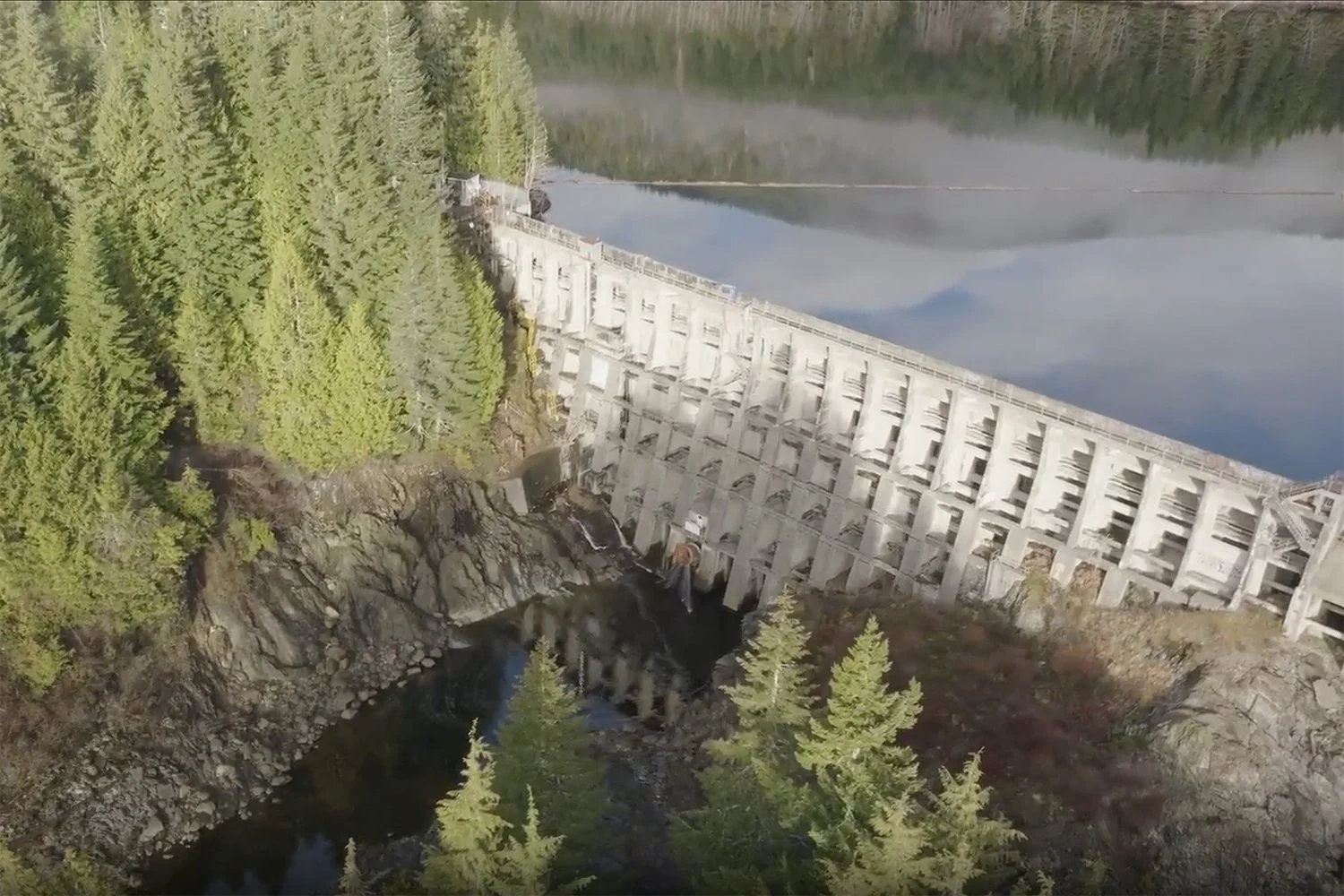
Diversion Dam
The Diversion Dam was built in 1911. The construction and operation of the power project was the beginning of the de-wilding process of Jordan River and responsible for the initial decline in salmon.
What would it take for salmon to return to the Jordan River?
This video by the Comox Valley Art Gallery’s Youth Media Project explores the answer.
What We’re Working On
We work to address the impacts of dams and hydro projects on salmon habitat in the Jordan River watershed. Through community watershed tours, we help people see how altered flows and infrastructure have changed the river over time, while challenging the limitations of the current Jordan River Water Use Plan and the effects of shifting baseline syndrome. We also advocate for salmon restoration and water management decisions that support healthy, functioning river ecosystems.
What You Can Do
HELP FUND SOLUTIONS
Support monitoring, research and restoration that address ongoing contamination and watershed health through one-time or monthly donations.
SEND A LETTER TO YOUR MP
Add your voice to calls for accountability, long-term stewardship and action on legacy contamination in the watershed.
Get watershed tour announcements and updates on our work by signing up for our newsletter.
VOLUNTEER WITH JRWA
Get involved in local monitoring, outreach and stewardship activities that support the long-term health of the watershed.
Keep Learning
Related blog posts:

Lorem ipsum dolor sit amet, consectetur adipiscing elit. Vestibulum id ligula porta felis euismod semper.